Published February 22, 2022 09:00AM
4 Brilliant Knife Techniques That’ll Make Any Meal Fancy
It's time to take your knifework – and your dishes – to the next level.
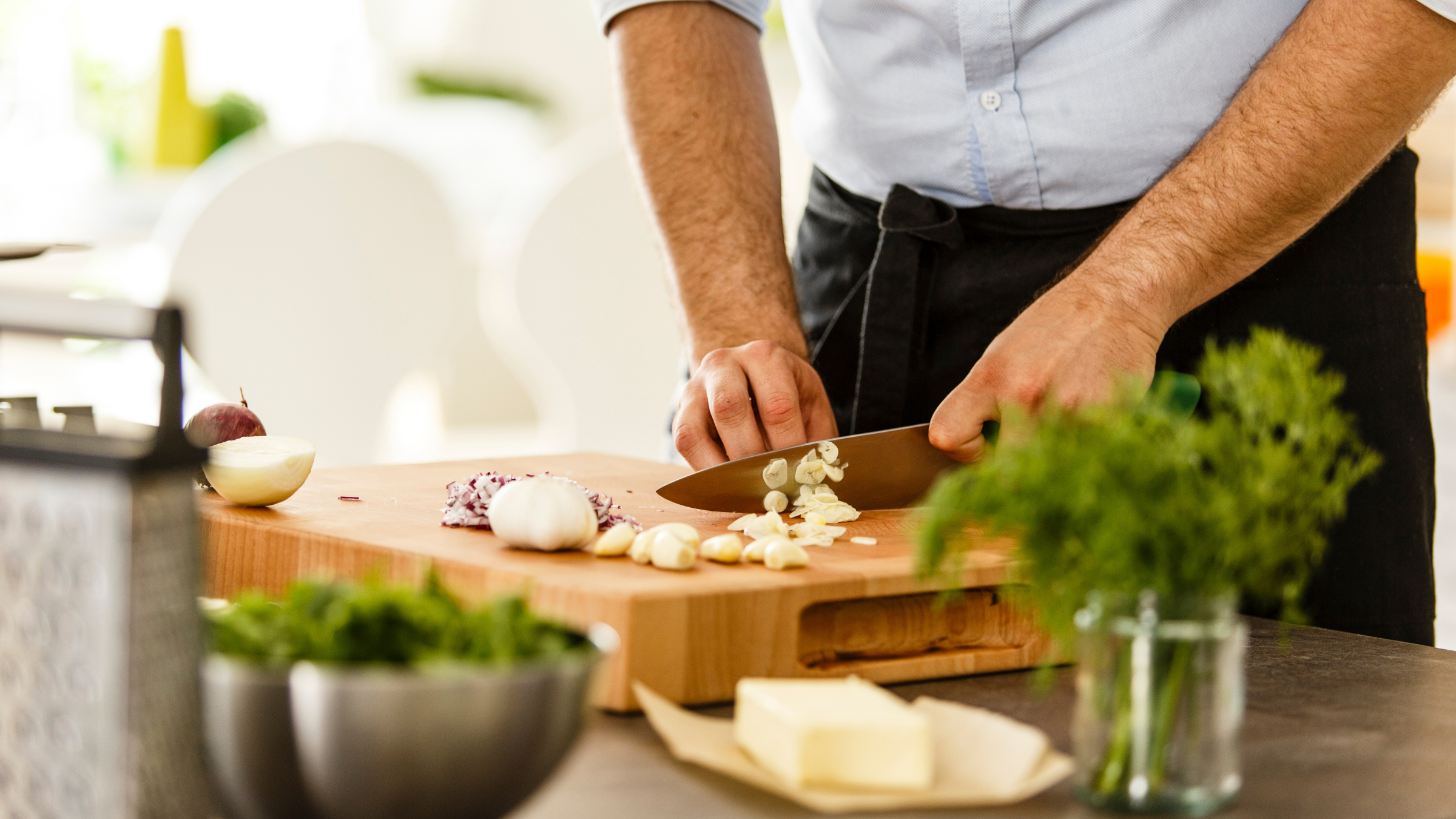
(Photo: fotostorm/gettyimages.com)
The speediest way to level up your culinary game: Show off some mad knife skills! While gettin’ fancy with your knives might sound complicated, it isn’t as hard as it looks. In fact, some of the techniques that look the most intimidating are actually super easy to master. Skillful cuts add polish and panache to any dish, and they’re manageable enough for even the most novice of chefs.
Go ahead, grab your go-to chef’s knife and get fancy! With a bit of practice and the right cutting tool in hand, you’ll be able to work what looks like magic on fruits, veggies and fresh herbs. Try these timeless French techniques and et voila: You’ll have instantly fancified foods.
1. Brunoise
What it’s for: Precise presentation, pops of color
Pronounced BROON-wahz, this small, precise cut renders vegetables into appealingly tiny cubes that add pops of color and flawlessly integrated layers of flavor. Brunoise-cut vegetables are traditionally used as an aromatic garnish for consommé, salads, sautés or meat dishes, or to impart color and flavor to stocks, soups, sauces or ground meat.
The cut is best for firm vegetables (think carrots, turnips, potatoes or parsnips), as it’s considerably more challenging on softer selections like tomatoes. You can try it with beets, zucchini, red peppers, leeks and even mushrooms once you’ve mastered it.
How to master this knife technique:
- Peel your vegetables – we’ll use turnips, since they’re easy to manage – and slice off the tops and root ends
- Cut slivers from each side of the turnip to make a square, then cut that square into 1/8-inch-thick planks
- Stack the planks and slice them lengthwise into 1/8-inch strips
- Cut strips crosswise in 1/8-inch sections to create teeny cubes
While you’re cutting, don’t skimp on squaring off initial cuts – you’ll save leftover bits of vegetables for stocks, sauces and pureed soups.
Fancify your food: Sauté brunoise beets and turnips and add to quinoa. Stir brunoise zucchini into creamy soups. Scatter salads with brunoise red and green peppers.
ADVERTISEMENT
2. Supreme
What it’s for: Leveling up oranges, lemons and other fruits
From the French “suprême” (pronounced soo-PRIM), it means ultimate or premium. The supreme technique was originally used to describe meat dishes in which the skin, bones, ligaments and other unwanted parts were discarded, leaving only the most desirable portions.
Supreming citrus involves getting rid of peels, bitter pith and tough membranes, leaving only juicy, tender segments of fruit. It’s kind of like a citrus filet. Try it with oranges, grapefruits, lemons or limes, as an artful finish for salads, cocktails, salsas or seafood dishes. For small citrus fruit, like tangerines, you’re better off just peeling and separating segments.
How to master this knife technique:
- Slice off the top and bottom of a citrus fruit, cutting all the way through the pith and creating a stable base
- Place the orange flat-side-down on a sturdy board
- Using a small knife with a thin, sharp blade, cut down the sides from top to bottom, following the natural curve of the fruit to remove sections of peel and pith
- Carefully slice out each segment between the membranes and transfer to a bowl
After you’ve removed all the segments, hold the membrane over another bowl and squeeze it firmly to extract the juice.
Fancify your food: Combine supremed grapefruit and pomegranate seeds, then drizzle with balsamic glaze. Top grilled seafood with supremed lemons and basil chiffonade. Toss a salad of supremed oranges, avocado cubes, jicama and arugula.
ADVERTISEMENT
3. Chiffonade
What it’s for: Sautéing and garnishing with max panache.
Chiffonading creates a polished presentation for sautéed greens and a more graceful garnish than coarsely chopped herbs. Pronounced SHEEF-oh-nahd, this technique turns leaves into elegant, ribbon-like strands – it’s like a classy version of shredding.
The chiffonade cut is perfect for chard, collards, kale, lettuce, sorrel and other leafy greens. Slender shreds cook rapidly and evenly, preserving brightness and texture. As a garnish, basil is ideally suited for chiffonade. However, this technique won’t work on rosemary, thyme, cilantro, parsley or other herbs with irregular shapes.
How to master this knife technique:
- Remove the thick, fleshy stems, then stack leaves (if you’re working with chard, for example) on a flat surface
- Using a sharp knife, slice the stack crosswise into very thin shreds no more than 1/16 inch wide, almost like blades of grass
Some chiffonade techniques call for tightly rolling the stack of leaves, then making perpendicular cuts. That’s fine if you’re using chard and sturdier greens, but it’s likely to bruise delicate basil and spinach.
Fancify your food: Sauté chard chiffonade with wild mushrooms and leeks. Braise collard chiffonade in coconut oil, cumin and smoked paprika. Scatter basil chiffonade over roasted vegetables.
ADVERTISEMENT
4. Tournée
What it’s for: Upgrade potatoes, add sophistication and style.
This classic, stylish cut transforms lumpy, awkward vegetables like potatoes or carrots into sleek, tasteful oblong shapes. Pronounced TOOR-nay, it means “turned” in French (you’ll see “turned potatoes” as a side on upscale restaurant menus). Besides visual appeal, the uniform size allows vegetables to cook more consistently, and the rounded sides roll around in the pan, so the veggies brown on all sides.
The tournée technique is typically used on potatoes and other roots but works on any firm vegetable. Try it on zucchini, golden beets, turnips, even chunks of rutabaga or winter squash.
How to master this knife technique:
- Start by peeling the vegetable (let’s say a potato), then slice off the ends and trim it to the desired length—two inches long is the most common
- Holding the potato between fingers and thumb, carefully trim sides and edges, cutting from top to bottom and tapering each end
- Turn the potato and repeat with the next section
In a perfect world, you’ll have seven evenly spaced cuts when you’re done. A small knife with a curved blade – known as a bird’s beak – simplifies the process, but any sharp paring knife works.
Fancify your food: Roast tournéed golden beets with olive oil and rosemary. Sauté tournéed zucchini and yellow squash with spinach chiffonade. Pan-fry tournéed turnips in butter and shower with thyme.
For more knife skills and handy cooking tips that’ll make any meal fancy, keep reading: